
Review a natural BBY WOW entrance
Check the approach, hand contact, expression and turn in a complete generated party clip.
The short answer
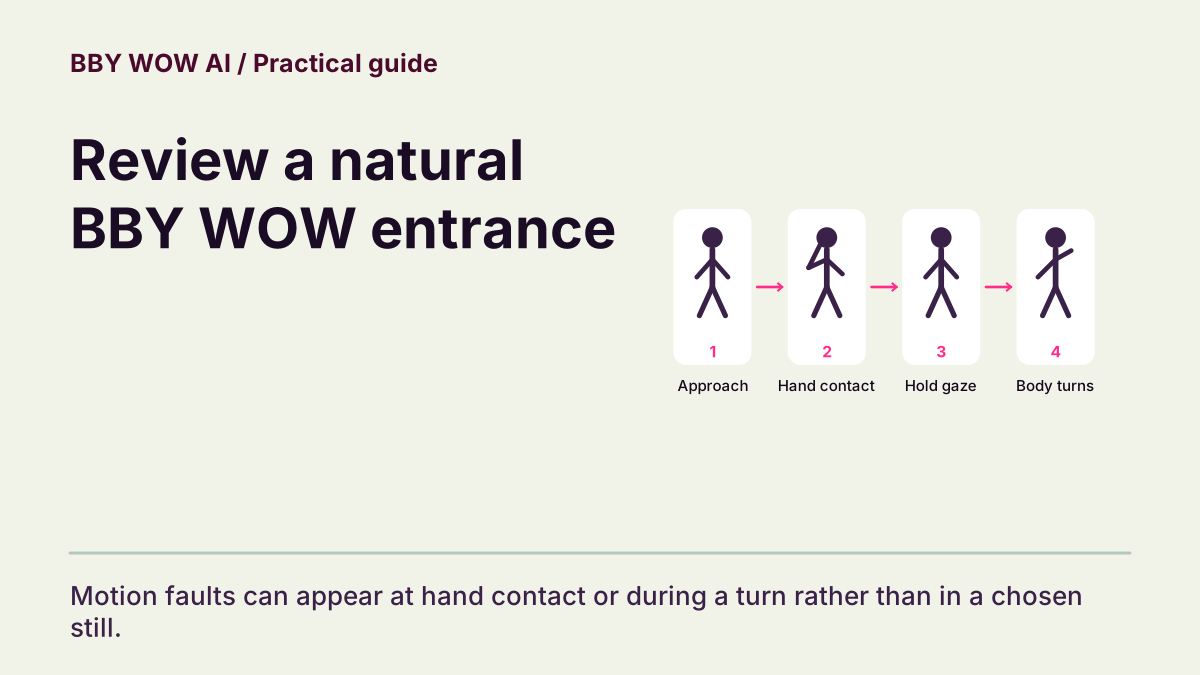
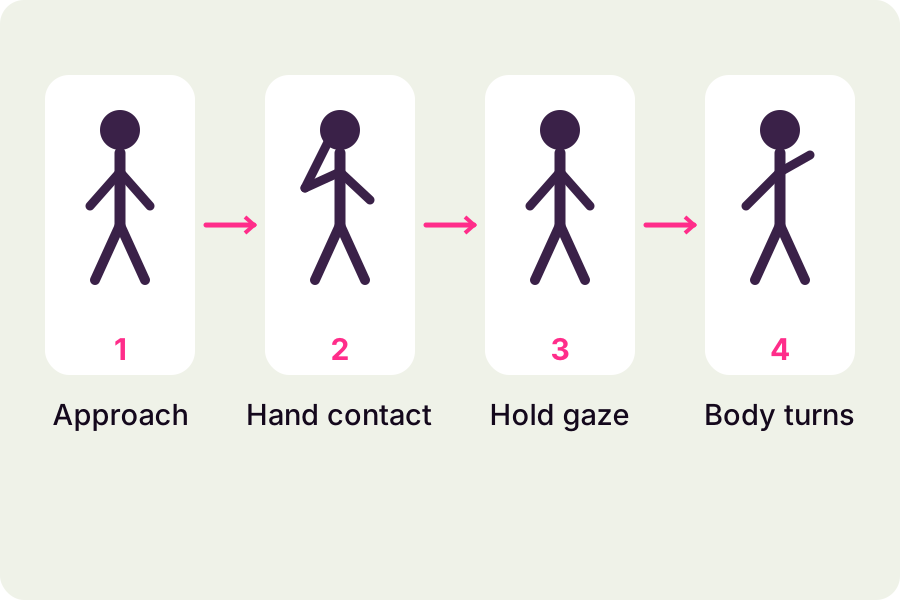
Watch once at native speed before pausing. Confirm the approach, hand-to-mouth gesture, held gaze and turn form a coherent sequence. Inspect hand contact and body orientation through the transitions. Faster playback can hide faults without fixing them.
In this guide
What to check
| Establish the sequence | Write down the actions you expect. |
|---|---|
| Watch the full shot at normal speed | Continuity is a moving-image question. |
| Check hands and paws during contact | Transitions need anatomical plausibility. |
| Look at weight and camera stability | A lean needs a believable support. |
| Keep evidence for a useful report | Record when the fault happens. |
Establish the sequence
Use the visible reference to identify the opening, middle gesture and ending. Avoid judging a dance only by the final pose. If you intended the party entrance instead, use that reference’s own steps; mixing the two creates an acceptance target that neither source contains.
Watch the full shot at normal speed
Play from beginning to end with the native duration intact. Look for a sudden reset, a frozen section or a jump in camera position. Slow playback can help locate a problem after the first pass, but your final check should include normal-speed viewing.
Check hands and paws during contact
Watch wrists, elbows and fingers as the hand approaches and leaves the mouth. For pets, inspect paws, forelegs and shoulder movement without assuming human joint ranges. An overlap can briefly obscure a limb; a persistent extra limb, impossible bend or merged body part is a different issue.
Look at weight and camera stability
Check where the body appears supported during the approach and turn. The subject should not visibly slide through the floor or change scale abruptly for no camera reason. Separate a deliberate approach toward the lens from a sudden cut or body stretch.
Keep evidence for a useful report
Note the time range, action and body part involved. Keep the selected work and input settings together, and contact support if needed. Changing a source or setting may change the next attempt, but it does not establish an improvement until you watch the new full result.
Contact support